
Shichi go san (shichi means seven, go means five, and san means three in Japanese) is the celebration for children of 3, 5, and 7 years of age. It started in Heian era, about 1,200 years ago. In those days the death rate of infants was so high that people thought very young children belong to God or mythological world rather than to this real world until they become 7 years old. In other words, they thought that very young children are unstable existence whose life has not settled firmly in this real world. So when children become 3, 5, and 7 years old, parents appreciate and celebrate that they could survive. They thank their guardian God for letting them survive and pray for their health, long lasting life, and happiness ever since.
Among Heian aristocracy, when their children became 3 years old, parents stopped shaving children’s hair and let it grow longer. When boys became 5 years old, parents began to make them wear ‘hakama’ which are long pleated culotte-like Japanese trousers, which represented the symbol of adults. When girls became 7 years old, parents began to use sash belts instead of strings for dressing or binding kimono on them, which also represented the symbol of adults. All of those practices were a kind of rites for children to come into society and to be admitted as real members of society.
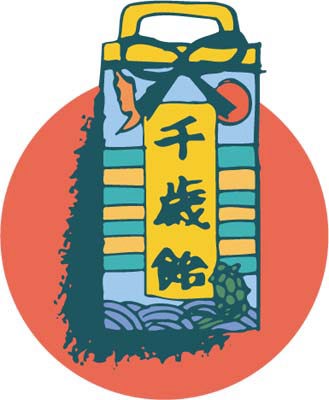
Now when children become 3(both boys and girls), 5(only boys), and 7 (only girls), parents dress them up and take them to the shrine on November 15th or a day near that. The shrine priest holds a ceremony to keep them from bad luck or evil spirits and pray for their health, long life and happiness. And the priest gives Chitose Ame (thousand year candy) to them. Parents have a professional photographer take children’s portraits. Some parents present the portraits to grandparents in remembrance.
Chitose Ame, which is candy shaped like a long stick, started in the 17th century Edo City. A candy shop owner, whose name was Kyubei(pronounce like Q-bay), had the idea to connect the shape like a long stick to long lasting life, and sell them as lucky charms and souvenir in the shrine’s yard. That became a big trend soon and remains nowadays. The candy's color is red and white. The combination of red and white is meant lucky, blessed and congratulation.